

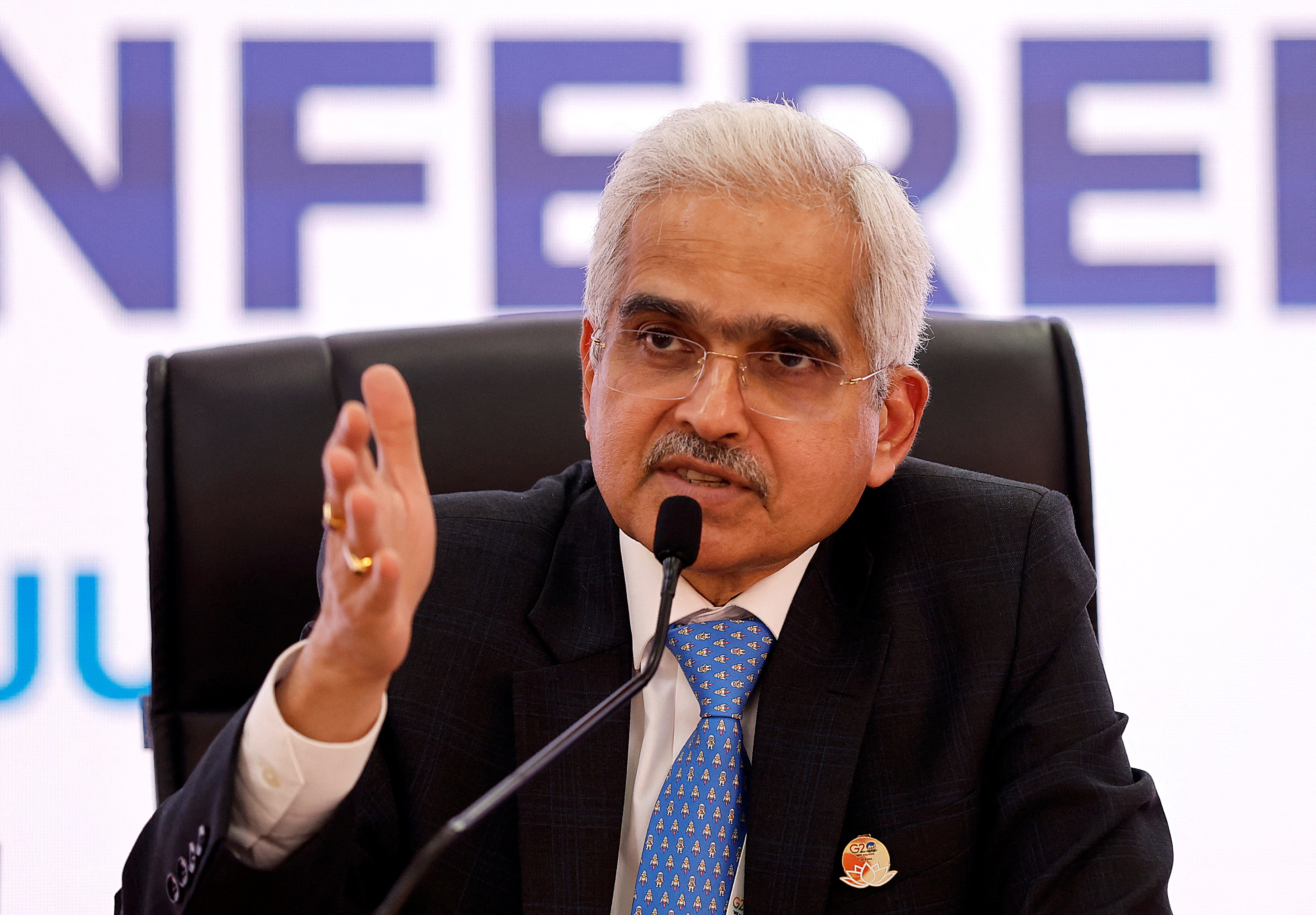
The Indian economy is projected to achieve high growth in 2026, driven by robust domestic demand and a resilient financial system, according to Reserve Bank of India (RBI) Governor Sanjay Malhotra. Despite a volatile and unfavourable external environment, India's GDP growth forecast has been revised upward to 7.3% for FY 2025-26, making it one of the fastest-growing major economies globally.
This optimistic outlook comes at a time when many advanced economies face slowing growth and recessionary pressures. India's strong fundamentals, healthy balance sheets, and policy reforms position the country to withstand global economic shocks effectively.
RBI Raises GDP Growth Forecast to 7.3%
The Reserve Bank of India revised its GDP growth projection for FY 2025-26 upward from 6.8% to 7.3% in December 2025, supported by strong agricultural prospects, GST rate cuts, low inflation, and healthy corporate balance sheets. RBI Governor Sanjay Malhotra stated that domestic factors continue to support economic activity despite external uncertainties.
India's real GDP registered a six-quarter high growth of 8.2% in Q2 FY 2025-26, underpinned by resilient domestic demand amid global trade and policy uncertainties. The growth was aided by buoyant industrial and services sectors, particularly financial services, real estate, and professional services.

Quarter-wise GDP Growth Projections for FY 2025-26
The RBI has provided detailed quarter-wise projections showing sustained momentum throughout the fiscal year and beyond.
| Quarter | GDP Growth Projection | Key Drivers |
|---|---|---|
| Q3 FY 2025-26 | 7.0% | Strong domestic consumption, government capex |
| Q4 FY 2025-26 | 6.5% | Sustained investment activity, manufacturing growth |
| Q1 FY 2026-27 | 6.7% | Agricultural recovery, rural demand pickup |
| Q2 FY 2026-27 | 6.8% | Continued reform momentum, export resilience |
These projections indicate that Indian economy growth will remain broad-based and sustainable, with risks evenly balanced according to the official RBI statement.
Domestic Demand: The Primary Growth Engine
According to the RBI, strong domestic consumption and investment activity continue to provide a solid foundation for economic expansion. Unlike previous cycles where India was heavily dependent on global demand, the current growth is increasingly anchored in domestic factors.
Key Growth Drivers Supporting 2026 Outlook
- Private consumption supported by rising incomes, income tax rationalization, and expanding urban demand across metros and tier-2 cities
- Government capital expenditure on infrastructure projects including highways, railways, and digital infrastructure under various flagship schemes
- Revival in private sector investment, particularly in manufacturing and services, driven by improved capacity utilization and PLI schemes
- Healthy agricultural prospects due to normal monsoon, higher reservoir levels, and better rabi crop sowing patterns
- Digital payments growth and financial inclusion initiatives expanding credit access to MSMEs and rural borrowers
Financial System Remains Resilient and Well-Capitalised
RBI Governor Malhotra emphasized that India's financial system is resilient and well-capitalised, supported by improved balance sheets across banks and corporates. This stability is crucial for sustaining credit growth and managing potential external shocks.
Banking Sector Highlights
| Indicator | Status | Implication |
|---|---|---|
| Non-Performing Assets (NPAs) | Declining trend | Improved asset quality across scheduled commercial banks |
| Capital Adequacy Ratio | Comfortable levels | Adequate cushion against future shocks and credit expansion |
| Corporate Leverage | Moderated significantly | Better financial health enabling fresh investment cycles |
| Credit Growth | Strong and sustainable | Supporting both consumption and productive investments |
However, the RBI also cautioned that risks persist in certain pockets, especially among non-banking financial companies (NBFCs), and said these will be closely monitored to maintain systemic stability.
Related Articles from MoneyMinted.in:
Global Headwinds vs India's Resilience
While the Indian economy is projected to register high growth, the global environment remains challenging. RBI has identified several external risks that could impact India's growth trajectory.
Key Global Challenges
- Persistent geopolitical tensions affecting global supply chains and commodity prices, particularly crude oil and natural gas
- Uncertain global trade conditions with rising protectionism and trade restrictions in major economies
- Volatility in global financial markets due to policy divergence among major central banks
- High interest rates in advanced economies creating capital flow pressures for emerging markets including India
Despite these headwinds, India's macroeconomic fundamentals remain strong. The country maintains sizeable foreign exchange reserves, prudent fiscal management, and strong institutional frameworks that provide buffers against external shocks.
Inflation Control and Monetary Policy Stance
The RBI noted that inflation is broadly under control, supported by timely monetary policy actions and supply-side measures. In December 2025, the central bank cut the repo rate to support growth while maintaining price stability.
Consumer price inflation eased significantly in 2025, averaging 2.3% until November compared to 4.9% in 2024, owing to a sharp fall in food prices. This benign inflation environment provides the RBI with policy flexibility to support growth.
RBI's Policy Priorities for 2026
- Maintaining price stability within the 2-6% target band while anchoring inflation expectations
- Preserving financial stability through prudent regulation and supervision of banks and NBFCs
- Supporting sustainable and inclusive growth by ensuring adequate credit flow to productive sectors
- Building strong guardrails to safeguard the economy from potential external shocks
What This Means for Businesses and Investors
For businesses, the RBI's outlook signals a supportive economic environment driven by demand and investment opportunities. Companies can plan expansion with confidence in sustained domestic demand and policy stability.
For investors, the forecast reflects policy stability and financial system strength, which are critical for long-term confidence. India is expected to remain among the fastest-growing major economies globally, offering attractive investment opportunities across sectors.
Sector-wise Opportunities
| Sector | Growth Outlook | Key Opportunities |
|---|---|---|
| Banking & Financial Services | Strong | Credit expansion, digital lending, rural penetration |
| Manufacturing | Robust | PLI schemes, capacity expansion, exports |
| Infrastructure | High | Government capex, PPP projects, smart cities |
| Consumer Discretionary | Positive | Rising incomes, urban demand, e-commerce growth |
Frequently Asked Questions
What is RBI's GDP growth forecast for India in 2026?
The Reserve Bank of India has projected India's GDP growth at 7.3% for FY 2025-26, revised upward from the earlier estimate of 6.8%. This makes India one of the fastest-growing major economies globally despite challenging external conditions.
What are the main drivers of Indian economy growth in 2026?
The main growth drivers include strong domestic consumption, government capital expenditure on infrastructure, revival in private sector investment, healthy agricultural prospects, benign inflation, and improved corporate and banking sector balance sheets.
How does India's growth compare to other major economies?
India is projected to remain the fastest-growing major economy in 2026, outpacing most advanced and emerging economies. While many developed nations face slowing growth or recession risks, India's growth remains robust at 7.3% due to strong domestic fundamentals.
Is India's financial system stable enough to support this growth?
Yes. According to the RBI, India's financial system is resilient and well-capitalised with declining NPAs, comfortable capital adequacy ratios, and improved corporate leverage. However, certain pockets in NBFCs require close monitoring to maintain systemic stability.
What are the key risks to India's growth outlook?
Key risks include volatile external environment, geopolitical tensions, uncertain global trade conditions, high interest rates in advanced economies, and potential capital flow pressures. However, India's sizeable forex reserves and policy buffers help mitigate these risks.
Key Takeaways
- RBI projects Indian economy growth at 7.3% for FY 2025-26, up from 6.8% earlier, making India the fastest-growing major economy
- Strong domestic consumption and investment activity remain the primary growth engines, reducing dependence on global demand
- India's financial system is resilient with declining NPAs, comfortable capital adequacy, and healthy corporate balance sheets
- Inflation is under control at 2.3% average (until November 2025), providing policy flexibility for growth support
- Despite global headwinds, India's macroeconomic fundamentals and policy buffers provide confidence in sustained growth trajectory
- Quarter-wise projections show sustained momentum with Q3 at 7.0%, Q4 at 6.5%, and growth continuing into FY 2026-27
Disclaimer
This article is for informational purposes only and does not constitute financial, investment, or economic advice. The projections and data are based on official RBI statements and authoritative sources as of January 2026. Economic conditions and forecasts are subject to change based on domestic and global developments. Readers are advised to consult qualified professionals before making any financial or investment decisions.
For professional inquiries regarding MoneyMinted blog, contact us at [email protected]